


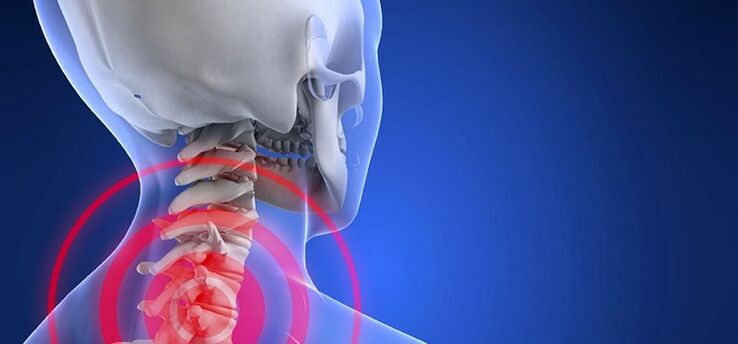
Cervical osteochondrosis is one of the most common disorders of the spine, which can be explained by the high mobility of this part of the body.As the disease progresses, severe pain occurs that seriously impairs a person's quality of life.That is why it is so important to consult a doctor at the first signs of pathology.
Cervical osteochondrosis clinic
The disease is progressive in nature and includes the emergence of dystrophic changes in the disc.There are seven vertebrae in this place that provide free movement of the head.This part of the spine is often violated in this way due to increased physical activity or insufficient muscle strength.
As the disease progresses, the metabolic processes of the spine are destroyed, the strength and elasticity of the intervertebral discs disappear, and the increased load causes cracks in the annulus fibrosus.As the process progresses, a herniation or hernia may develop.
Development level
- First degree.This disease causes almost no symptoms.A person may experience mild pain in the neck that worsens when turning the head.During the exam, the doctor may notice slight muscle tension.
- Second degree.This form is characterized by significant pain that can radiate to the arm or shoulder.This is because the height of the disc is violated, causing nerve compression.The pain may become worse with head movement.This condition is characterized by headaches, increased weakness, and reduced ability to work.
- Level three.Abnormal manifestations may intensify several times and the pain may persist.Not only can they be felt in the neck, but they can also affect the shoulders or arms.The development of a hernia can cause weakness in the arm.One person complained of chronic fatigue and dizziness.Upon examination, your doctor may find that your neck mobility is impaired.Additionally, patients experience pain on palpation.
- Four degrees.At this stage, the disc is completely destroyed, causing connective tissue to form in its place.Patients also experience significant increases in symptoms of dizziness, impaired motor coordination, and tinnitus.These symptoms are the result of the involvement of the vertebral artery in the pathological process - it is responsible for supplying blood to the cerebellum and part of the brain.
reason
Under the influence of various factors, the load on the cervical spine increases.The muscles try to compensate for this process, which can cause cramping and circulation problems.Therefore, a degradation process occurs.
The main causes are as follows:
- Insufficient physical activity;
- Metabolic disorders;
- incorrect posture;
- being overweight;
- Scoliosis;
- Systemic muscle tension;
- stressful situations;
- dysplastic connective tissue abnormalities;
- Circulation problems in the neck;
- genetics;
- uncontrolled physical activity;
- Spinal abnormalities.
Contrary to popular belief, osteochondrosis is not only found in older adults.Today, such violations are not uncommon even among children and adolescents.In addition, the number of cases of the disease among people aged 18-30 years is increasing significantly.
Symptoms and signs of disease
Almost everyone has some symptoms of osteochondrosis.If it is accompanied by severe pain, you should consult a doctor immediately.Signs of pathology include:
- Neck pain.They can radiate to the back of the head, shoulders, eyes, or ears.They are often felt during exercise.Sometimes pulsating pain occurs.
- Arm pain.Discomfort may also occur in the shoulders, hands, and forearms, and may persist even at night.
- Impaired movement of hands and fingers.The person may lose feeling and muscle strength.
- Muscle tension in the morning.
- tinnitus.
- Headache.Typically, they are first felt on the back of the head, then on the temples and top of the head.
- Numbness and tingling in the extremities.
- Fainting, dizziness, and dark vision.These signs most often appear when the head moves accidentally.
- Tongue numbness.
- Hearing and vision worsen.
- Pain in the heart area.
- The size of the connective tissue in the neck increases.
- Sleep, memory, attention disorders.
- Voice changes - hoarseness, weakening of voice, etc.
Symptoms of cervical and thoracic osteochondrosis
Diseases of this part of the spine are characterized by the following manifestations:
- Systemic headache;
- intercostal neuralgia;
- pressure changes;
- loss of motor coordination;
- Dizziness;
- chronic fatigue;
- heartache;
- infectious diseases;
- Dots flickered before my eyes;
- tinnitus;
- numbness in fingers;
- Pain in arms and shoulders.
This form of osteochondrosis can cause a number of syndromes and may cause problems with the function of certain organs.
For example, this pathology often triggers heart disease.Therefore, if these symptoms occur, you should consult your doctor immediately.
syndrome
In addition to its general manifestations, cervical osteochondrosis has features of a number of syndromes.Thanks to these signs, an accurate diagnosis can be made and treatment chosen.
Koreshkovi
This condition is also commonly known as cervical sciatica.Radiculitis syndrome is the result of compression of a nerve in the neck.As this process progresses, the pain spreads downward, reaching the shoulder blade.They can affect the forearms and fingers.Sometimes patients complain of goosebumps and tingling sensations.
The manifestations of the disease are determined by the location of the pathology.Therefore, when the roots of the central nerves become pinched, swelling can occur, affecting the thumb, middle and index fingers.If the brachial nerve roots are affected, the process can affect the little and ring fingers.
stimulus reflex
This condition is characterized by severe pain that is concentrated in the neck or back of the head.Often, discomfort worsens after sudden exercise.Examples of this include pain when the patient suddenly turns their head after sleeping.Discomfort may also be felt in the chest or shoulders.
vertebral artery syndrome
The main symptom is headache, which may be throbbing or burning.They often spread to the back of the head, crown of the head, and temples.Additionally, discomfort is often experienced above the eyebrows.Pain may worsen after prolonged exercise.Additionally, discomfort increases after being in uncomfortable positions.When immunity is weakened, nausea, fainting, hearing problems, and vestibular organ dysfunction may occur.In addition, vertebral artery syndrome often causes vision problems.Eye pain may occur.
heart
The first symptom to appear is angina.This is why there is a threat of futile treatment of angina rather than eliminating the main cause of the discomfort.
Cardiac syndrome occurs due to compression of the phrenic nerve or the roots of the chest muscles.Paroxysmal pain that lasts for a long time may occur.Additionally, sneezing, coughing, and inaccurate head movements can increase discomfort.
The syndrome is associated with tachycardia and extrasystoles.In this case, the pain does not decrease even with antianginal drugs.If you have an EKG during an attack, it won't show any symptoms of circulatory problems.
Complications and consequences
The most dangerous complications include:
- A herniated disc may cause a hernia to form.
- The disc ruptures and compresses nerves and blood vessels.In this case, the spinal cord becomes compressed, which is very life-threatening.
- Radiculopathy is a disease of the nerve roots.
- The formation of osteophytes - so-called spurs on the vertebrae.As a result, paresis and paralysis often occur.
A dangerous complication of this osteochondrosis is palmar aponeurosis contracture.
In this case, the body's tendons lose their ability to stretch.As a result, the fingers become deformed and fail to function properly.
diagnosis
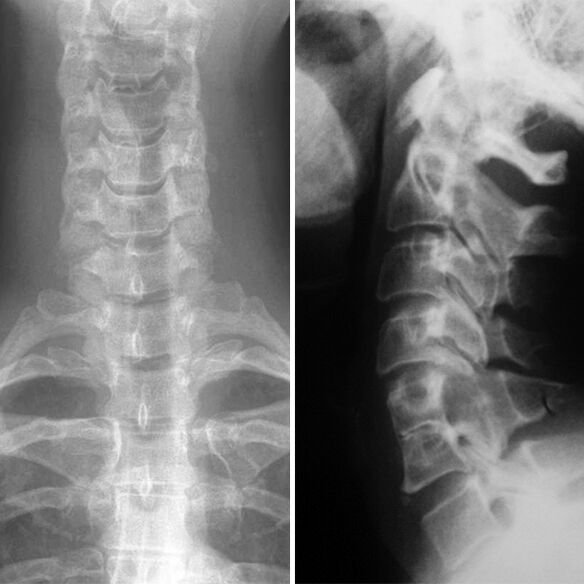
To diagnose this disorder, you need to consult a neurologist.Experts will prescribe the following types of studies:
- radiography;
- computed tomography;
- Magnetic resonance imaging.
A Doppler ultrasound may be performed to evaluate the condition of the cervical blood vessels.If there are problems with circulation, a cerebral flow chart should be done.You should also contact the ophthalmologist who performed the fundus examination.
How to treat
To achieve ideal results, treatment must be comprehensive.For this purpose, pharmaceutical and non-pharmacological methods are used.Doctors often prescribe medications that can help relieve pain and inflammation.
Medications must be taken to normalize brain circulation.If the pathology causes muscle tension, you will need to take relaxants.In addition, vitamin complexes are also very useful.
Physical therapy plays an important role in the treatment of this disease.Paraffin baths and electrophoresis are particularly useful.Hydrotherapy, hydrotherapy, massage, acupuncture and magnet therapy are also often used.However, therapeutic exercises are considered the most effective treatment method.In particularly difficult cases, surgical intervention is inevitable.
Osteochondrosis of the cervical spine belongs to the category of quite dangerous diseases, since it not only causes pain, but also leads to the development of serious consequences.To avoid complications, seek medical help if you experience any discomfort in your neck.